Olivetti Programma 101: when design made computing personal

Long before IBM or Apple popularized the idea of the personal computer, a small team in Italy had already shifted the paradigm.
In 1965, during the New York World's Fair 1965, Olivetti introduced the Programma 101.
A machine that didn’t just compute.
It redefined who computing was for.
A different starting point
The Programma 101 was not designed for engineers.
It was not built for laboratories.
It didn’t belong in a server room.
It was designed for people.
That decision changed everything.
Behind it were Pier Giorgio Perotto, Gastone Garziera and Giovanni De Sandre, together with Mario Bellini.
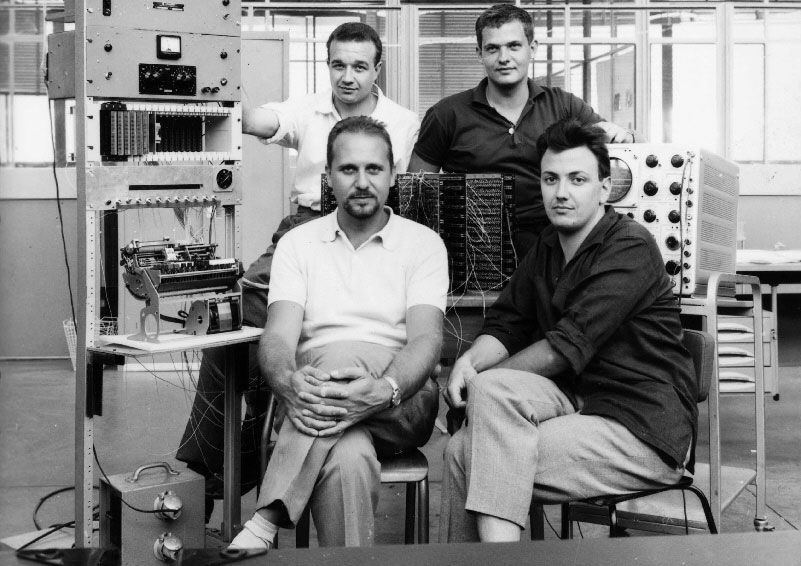
But what makes this project remarkable is not only who built it.
It’s how they thought about it.
When technology follows design
Most technological products start from capability.
What can we build?
What is possible?
The Programma 101 started somewhere else:
How should this be used?
That shift is subtle, but fundamental.
The interface was not an afterthought.
It was the product.

Buttons, inputs, feedback, physical interaction —
everything was designed to reduce distance between the machine and the user.
Not to impress.
To be understood.
The first “personal” computer
The term “personal computer” would come later.
But the idea was already there.
A machine that:
didn’t require specialized knowledge
didn’t need a dedicated space
didn’t force the user to adapt to it
Instead, it adapted to the user.
It brought computing out of the system
and into everyday life.
Invisible impact
The Programma 101 was not just a conceptual success.
It was a commercial one.
Even NASA used it for calculations during the Apollo 11 Moon Landing.
And yet, it rarely appears in mainstream narratives of computing history.
The spotlight moved elsewhere.
But the idea stayed.
Why it still matters
Looking at it today, what stands out is not nostalgia.
It’s clarity.
A reminder that:
Innovation is not only technical
Accessibility is a design decision
And the most important shift is often not what a product does
but who it is designed for
Final thought
The Programma 101 didn’t just anticipate the future.
It anticipated a way of thinking.
One where design is not decoration applied to technology.
But the thing that makes technology usable, understandable — and ultimately, human.
date published
Jan 15, 2026
reading time
5 min


